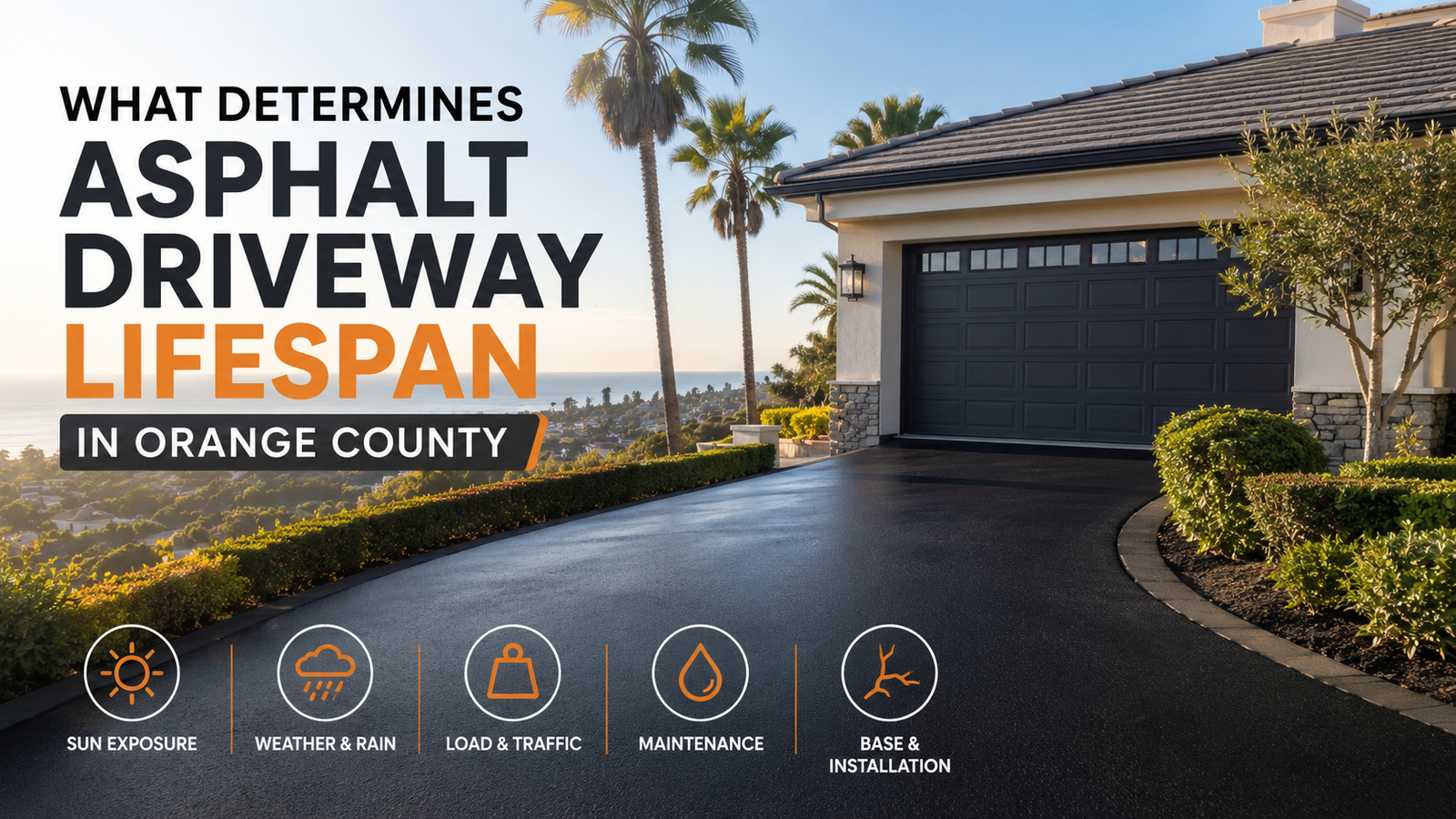
One of the most common questions homeowners have when considering an asphalt driveway is simply how long it will last. Generally speaking, a well-installed and properly maintained Asphalt Driveway Lifespan Orange County can last anywhere from 15 to 30 years, though where a particular driveway falls within that range depends heavily on a combination of installation quality, climate exposure, and ongoing maintenance. Understanding what actually drives that variation helps Orange County homeowners set realistic expectations and make informed decisions about both installation and long-term care.
Installation Quality Is the Foundation of Longevity
More than any other single factor, the quality of the original installation determines how long an asphalt driveway will ultimately last. This starts well below the visible surface. A properly prepared subgrade, compacted and graded so water drains away rather than pooling, forms the foundation everything else depends on. On top of that, a stone base layer, typically several inches deep, provides the structural support needed to bear the weight of vehicles without shifting or settling unevenly over time. The asphalt surface itself also needs adequate thickness, generally a minimum of a few inches of compacted material, to handle regular vehicle loads without prematurely cracking or rutting. Driveways installed with a thin surface layer over an inadequately prepared base are far more likely to develop problems well ahead of schedule, regardless of how well they’re maintained afterward.
How Orange County’s Climate Affects Asphalt Longevity
Climate plays a significant role in asphalt durability, and Orange County’s conditions present a distinct set of challenges compared to regions with harsh winters. While freeze-thaw cycling, a major contributor to asphalt cracking in colder climates, is less of a factor here, the region’s consistent sun exposure and warm temperatures create their own form of stress on pavement. Prolonged UV exposure gradually breaks down the asphalt binder through oxidation, causing the surface to become more brittle over time. Extended periods of high heat can also soften asphalt temporarily, making it more susceptible to rutting or indentation under sustained heavy weight, such as a vehicle parked in the same spot for an extended period during a heat wave. Understanding these region-specific stressors helps explain why maintenance practices suited to Orange County’s climate differ somewhat from generic advice aimed at colder parts of the country.
Traffic Patterns and Everyday Use
How a driveway is actually used has a meaningful impact on how quickly it wears. Regular use by standard passenger vehicles generally causes gradual, predictable wear that a well-installed driveway can handle for many years. Heavier vehicles, including RVs, boats on trailers, or larger trucks, place significantly more stress on the pavement and can accelerate wear if the driveway wasn’t originally designed to accommodate that kind of weight. Repeatedly parking in the exact same spot, particularly during hot weather when asphalt is more pliable, can also lead to localized indentation over time.
The Role of Routine Maintenance
Even a well-installed driveway requires ongoing care to reach the upper end of its potential lifespan. The most impactful maintenance practices include:
- Sealcoating every two to three years to protect against UV damage and moisture infiltration
- Promptly filling small cracks before they widen and allow water to penetrate into the base layer
- Keeping the surface clean and free of standing water, oil stains, or debris that can accelerate deterioration
- Avoiding heavy point loads, like jack stands or heavy equipment left in a single spot for extended periods
Driveways that receive this kind of consistent attention often perform at the higher end of the expected lifespan range, while those that go without maintenance for years at a time tend to develop problems well ahead of schedule.
Common Questions About Asphalt Driveway Lifespan
What’s the biggest factor in how long a driveway lasts?
While climate and usage both play meaningful roles, the quality of the original installation is generally considered the single biggest factor. A driveway built on a properly compacted base with adequate asphalt thickness has a significant head start over one that was installed with shortcuts, regardless of how well it’s maintained afterward.
Does asphalt last as long in warm climates as in cold ones?
Both warm and cold climates present their own challenges. Cold climates deal primarily with freeze-thaw cracking, while warm, sun-intensive climates like Orange County’s face more UV-driven oxidation and potential softening during extreme heat. With proper maintenance tailored to the specific climate, asphalt can achieve a comparable lifespan in either environment.
How can homeowners tell if a driveway is nearing the end of its usable life?
Widespread alligator-pattern cracking across large sections of the surface, potholes that continue to reappear after patching, and significant unevenness or sinking are all signs that a driveway may be approaching the point where resurfacing or full replacement becomes more practical than continued patching.
Does the color of asphalt affect how it holds up in hot climates?
Asphalt’s naturally dark color does absorb more heat than lighter-colored materials like concrete, which can contribute to softening during extreme heat. This is one of the reasons avoiding heavy, stationary loads during the hottest parts of the year is a commonly recommended precaution in warm climates.
Why Base Preparation Matters So Much in This Region
Because Orange County doesn’t experience the freeze-thaw stress that drives much of the base-related failure seen in colder climates, some might assume base preparation matters less here. In practice, a stable, well-compacted base remains just as important, since it’s what prevents the driveway from shifting or developing dips and depressions over time, regardless of climate. Poor drainage, which often stems from inadequate base grading, can lead to standing water that accelerates surface deterioration even in a generally dry climate, particularly during the region’s occasional heavy rain events.
The Value of Periodic Professional Assessment
Even attentive homeowners can miss early warning signs of developing problems, particularly issues that start below the surface before becoming visible. Having a paving professional periodically assess a driveway, even when no obvious problems are present, can catch developing base or drainage issues before they progress into more significant cracking or surface failure. This is particularly useful for driveways approaching the middle of their expected lifespan range, when early intervention can meaningfully extend the time before more extensive resurfacing or replacement becomes necessary.
Realistic Lifespan Expectations by Driveway Type
Not every driveway experiences the same wear patterns, and expectations should be adjusted accordingly. A driveway used exclusively by passenger vehicles, installed with proper base preparation and maintained on a regular sealcoating schedule, often reaches the upper end of the typical lifespan range. A driveway that regularly accommodates heavier vehicles or that has gone years without maintenance may fall closer to the lower end, even if it was originally installed to the same standard. Understanding which category a particular driveway falls into helps set realistic expectations for when major maintenance or replacement might become necessary.
How Drainage Design Influences Long-Term Performance
Water is one of the most consistent threats to asphalt durability, regardless of climate, and proper drainage design plays a significant role in how long a driveway ultimately lasts. A driveway graded correctly during installation directs rainwater away from the surface and toward an appropriate drainage point, rather than allowing it to pool in low spots. Even in a generally dry climate like Orange County’s, the region’s occasional heavy rain events can expose drainage weaknesses that might otherwise go unnoticed for years. Standing water that lingers on a driveway surface gradually works its way into small surface imperfections, and over repeated exposure, this contributes to the kind of subsurface deterioration that shortens a driveway’s usable life well before the asphalt itself would otherwise show significant wear.
Comparing Lifespan Expectations to Actual Performance
It’s worth noting that the commonly cited 15-to-30-year lifespan range for asphalt driveways represents a broad average across a wide variety of installation quality, climate conditions, and maintenance habits. A driveway installed with shortcuts, a thin surface layer, inadequate base compaction, poor drainage grading, is more likely to fall toward the lower end of that range or even short of it, regardless of the climate it’s in. Conversely, a driveway built with proper base preparation and adequate thickness, paired with consistent maintenance over the years, often reaches or exceeds the upper end of the expected range. This is why lifespan estimates should be understood as a general guideline rather than a guarantee, since the specific combination of factors present on any individual property ultimately determines the outcome.
Getting the Most Out of an Asphalt Driveway
Asphalt driveway lifespan in Orange County ultimately comes down to a combination of factors working together: how well the driveway was built from the ground up, how it holds up against the specific climate conditions it faces, and how consistently it receives routine care over the years. For homeowners in Orange County researching asphalt driveway lifespan and what realistically affects it, focusing on proper installation and a consistent maintenance routine tailored to the region’s sun exposure offers the clearest path to getting the most years out of the investment.