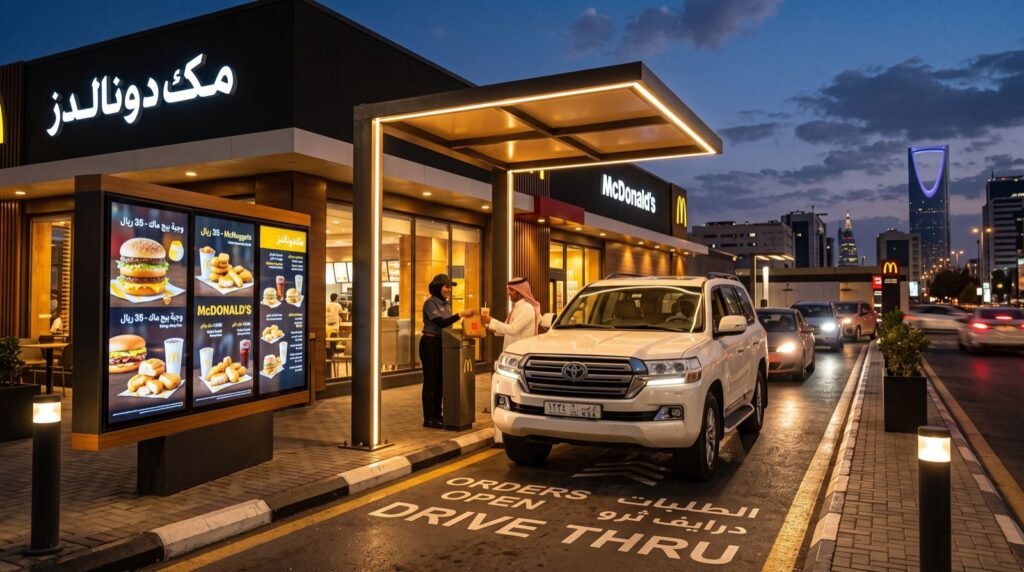
Walk into any busy government service center, bank branch, or quick-service restaurant in Riyadh or Jeddah today and the single biggest driver of a bad review is rarely the product — it’s the wait. A reliable queue management system in Saudi Arabia is no longer a “nice to have” for customer-facing branches; by 2026 it has become the baseline expectation of a population that does almost everything else, from paying bills to renewing an Iqama, on a screen. This guide breaks down what modern queueing technology actually does, how it pairs with drive-thru hardware for food-service brands, and why getting the billing and CRM side right matters just as much as the hardware on the counter.
What a Queue Management System Actually Solves in 2026
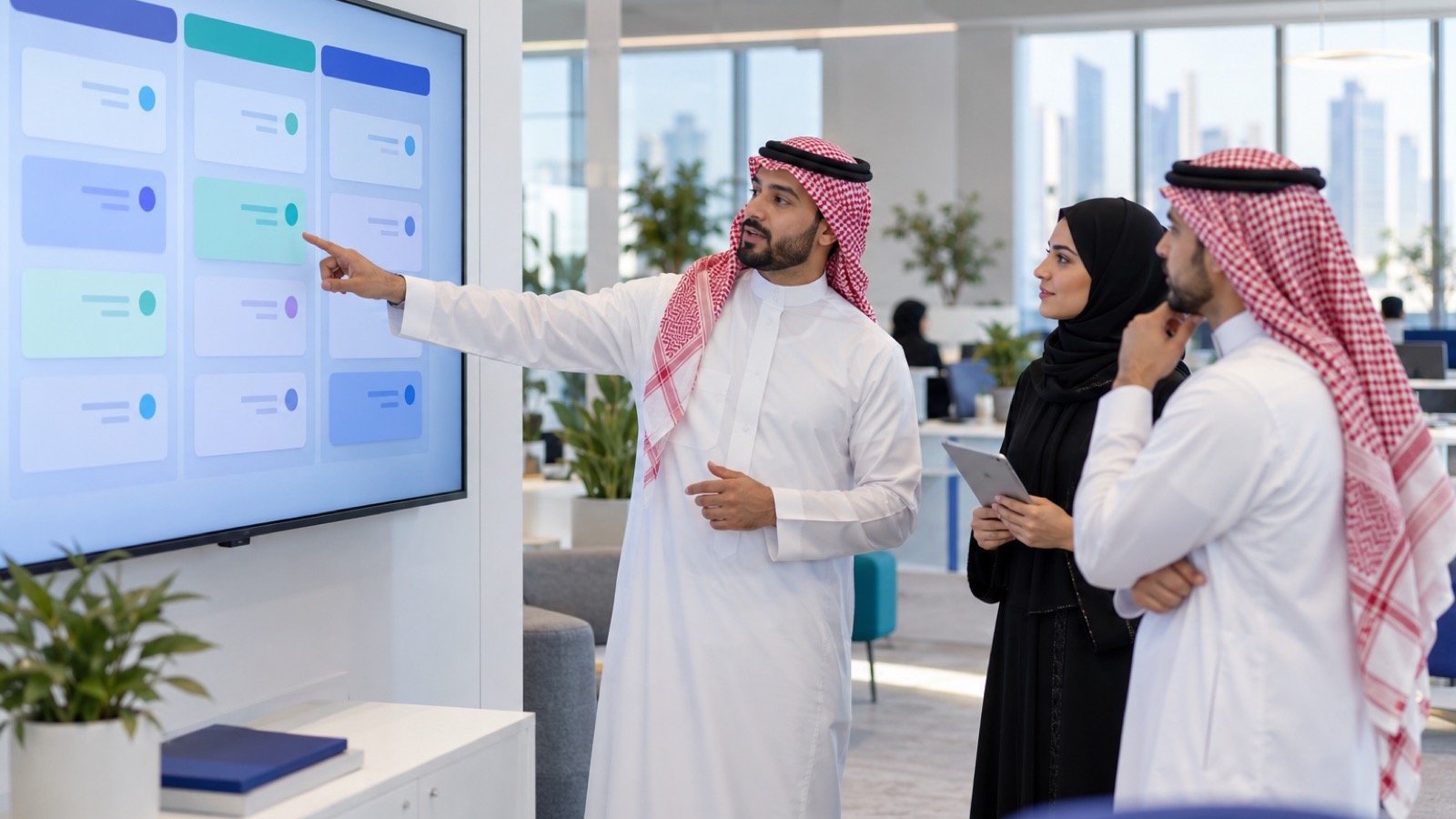
At its core, a queue management system replaces the paper ticket and the shouting usher with a digital flow: customers take a virtual number from a kiosk, app, or SMS, staff call them from a dashboard, and screens or voice prompts tell people exactly where to go. The value isn’t the ticket itself — it’s the data behind it. Branch managers can see dwell time per service type, staff can be reassigned the moment a line backs up, and head office gets a live view across every location instead of a monthly spreadsheet.
That data layer is exactly what changed between the first generation of queueing tools and today’s platforms. A 2026-grade system integrates with appointment booking, WhatsApp notifications, and reporting dashboards rather than existing as a standalone ticket printer bolted onto a wall.
Queue Management System in Saudi Arabia: Where the Pressure Is Highest
Saudi Arabia’s service sector is scaling fast under Vision 2030, and three segments feel queue pressure hardest: government service centers, healthcare clinics, and retail banking branches. In all three, regulators and customers alike now expect digital flow management, not a numbered paper slip.
Operators evaluating a queue management system in saudi arabia should look past the kiosk hardware and ask about multi-branch reporting, Arabic-and-English interface support, and integration with existing CRM and appointment tools. Those three factors tend to separate systems that get used properly from systems that get switched off within six months because staff found them clunky.
- Real-time dashboards showing wait time by branch and by service type
- Arabic-first interfaces with English fallback for staff and tourists alike
- SMS and WhatsApp alerts so customers can wait off-site instead of in a lobby
- Integration hooks into existing CRM, POS, and appointment-booking software
- Exportable analytics for management and, increasingly, for regulatory reporting
When the Queue Moves to a Lane: PAR Drive Thru Solutions
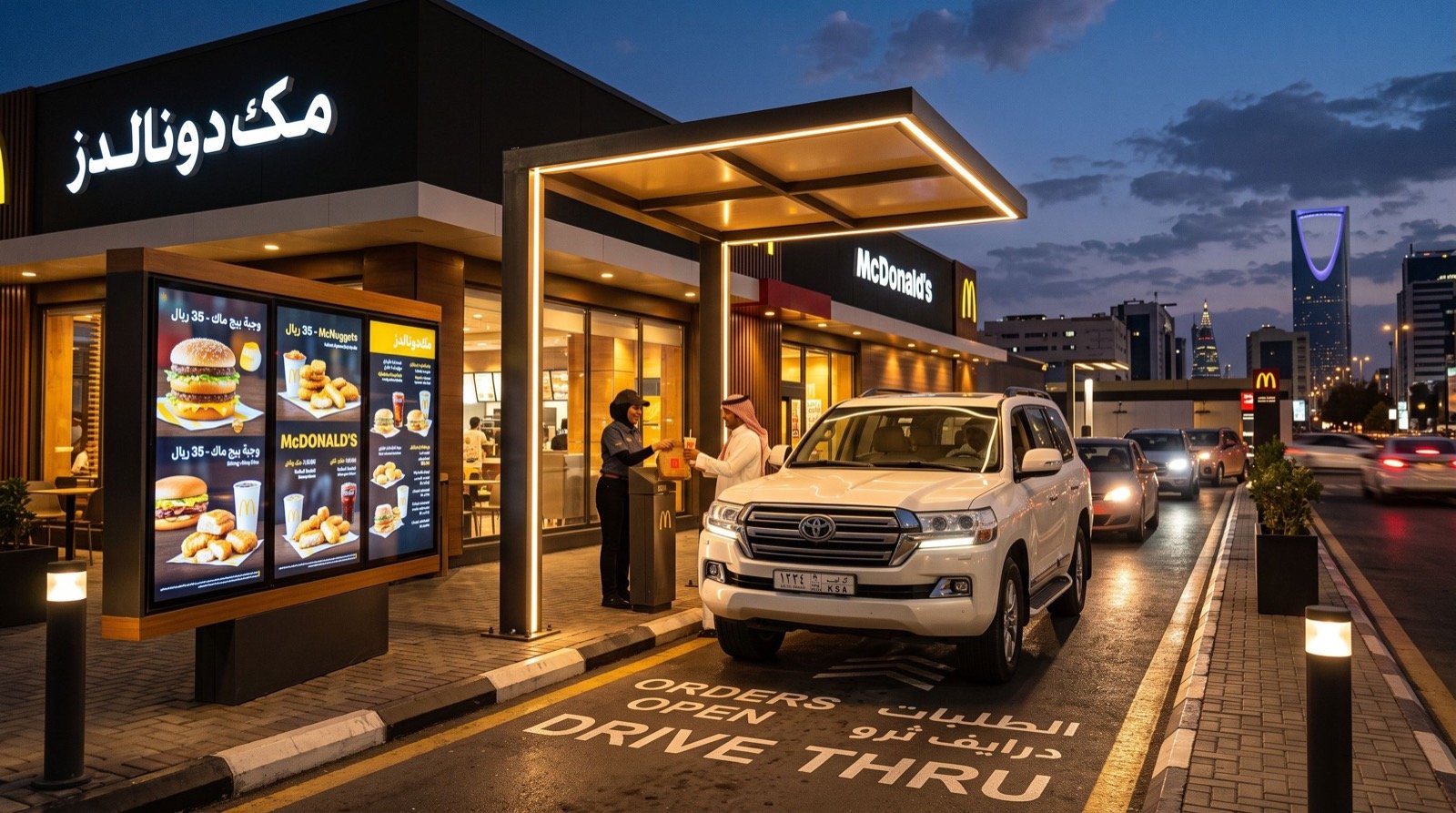
Quick-service restaurants face a related but distinct version of the same problem. The “line” is a lane of cars, the clock is measured in seconds per vehicle, and a single slow order can cascade into a ten-car backup that hurts both throughput and brand perception. This is where dedicated drive-thru technology earns its budget line.
PAR Drive Thru solutions bring the same logic that makes indoor queueing work — real-time visibility, faster handoffs, fewer manual steps — into the drive-thru lane itself, pairing order-confirmation screens, timer tracking, and kitchen-display integration so a car’s order is already cooking before it reaches the window.
For multi-brand franchise groups operating across the Kingdom, the appeal is consistency: the same order-accuracy and speed-of-service benchmarks apply whether the lane is in Riyadh, Dammam, or Abha.
Legacy Line Management vs. Connected Queue Technology
| Factor | Legacy Ticket System | Connected Queue Platform (2026) |
|---|---|---|
| Customer wait visibility | None — customer must stand and watch | Live countdown via SMS/app |
| Staff reassignment | Manual, after the queue has already grown | Triggered by live dashboard alerts |
| Reporting | End-of-day paper tally | Real-time, multi-branch analytics |
| Language support | Single language, printed | Arabic/English, voice and screen |
| Integration | Standalone | CRM, POS, billing and appointment systems |
Closing the Loop: Billing, CRM and E-Invoicing
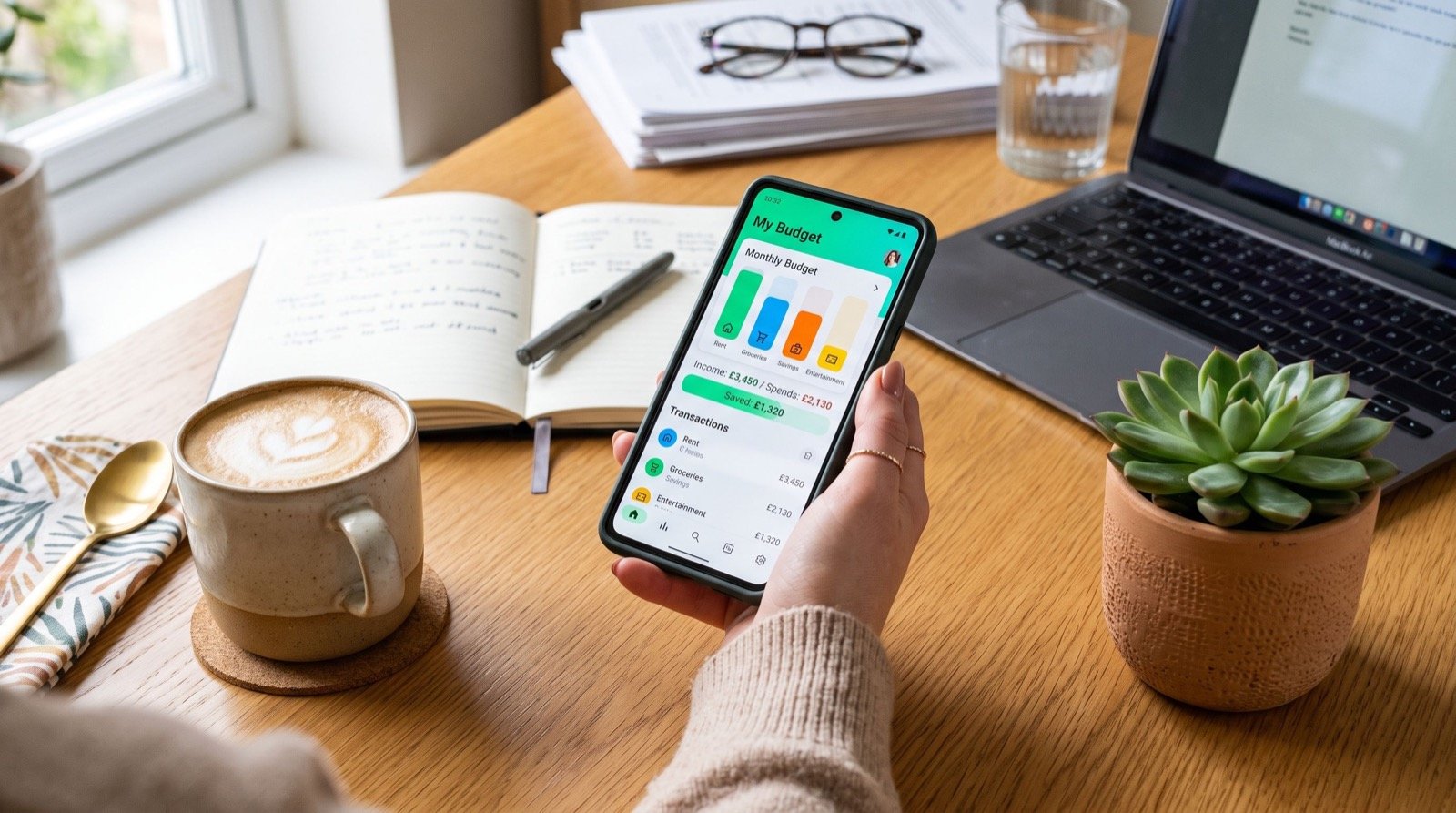
None of this operational speed matters if the back office can’t keep up. A branch that serves customers faster but still reconciles invoices manually just moves the bottleneck from the lobby to the accounts team. Saudi businesses now have to think about queue data, CRM records, and ZATCA-compliant e-invoicing as one connected pipeline rather than three separate systems.
For businesses working through that exact integration — linking CRM and billing systems to 2026 e-invoicing requirements — the dependable specialists covering this topic walk through how to connect customer-facing operations to compliant back-office billing without re-platforming everything at once.
On the regulatory side, the Zakat, Tax and Customs Authority has published clear phased requirements for electronic invoicing that every retail, healthcare, and food-service operator in the Kingdom should be tracking directly from the source — see the official guidance at ZATCA’s e-invoicing portal for the current rollout phase and technical requirements.
Rollout Timeline: What a 2026 Implementation Actually Looks Like
Operators often assume a queue and drive-thru upgrade means weeks of disruption. In practice, most 2026 rollouts follow a predictable sequence, and knowing the steps in advance makes budgeting and staffing far easier.
- Site assessment: branch layout, current wait-time data, and network/power readiness
- Pilot deployment at one or two high-traffic branches to validate kiosk placement and staff workflow
- Staff training on the dashboard, call-forward logic, and exception handling
- Phased rollout across remaining branches, usually grouped by region
- Post-launch review at 30 and 90 days to compare wait-time data against the pre-launch baseline
Franchise groups adding drive-thru hardware on top of indoor queueing tend to stagger the two projects rather than launching both on the same day, since kitchen staff and front-of-house staff are learning different parts of the new workflow simultaneously.
What Branch Managers Should Track After Go-Live
A system is only as good as what gets measured afterward. Branch and operations managers in Saudi Arabia should keep an eye on a short list of numbers rather than drowning in dashboard noise:
- Average wait time by hour of day, compared week over week
- Abandonment rate — customers who take a ticket and leave before being served
- Staff-to-customer ratio during identified peak windows
- Drive-thru order-to-window time, if applicable, broken out from indoor service metrics
These four numbers alone are usually enough to justify the investment to senior management within the first quarter, long before a full annual review.
Frequently Asked Questions
Does a queue management system in Saudi Arabia need to support Arabic by default?
Yes. Any system deployed in government, healthcare, or retail branches should default to Arabic with English as a secondary option, since staff and customer expectations in 2026 assume a fully localized interface rather than a translated add-on.
How does drive-thru technology reduce order errors, not just wait time?
Modern drive-thru platforms sync the order-confirmation screen directly with the kitchen display, so the item a customer sees on-screen is exactly what the kitchen receives — removing the verbal hand-off step where most order mistakes happen.
Can a queueing platform integrate with our existing POS and billing software?
Most 2026-grade platforms are built with open APIs specifically so they can sit alongside existing POS, CRM, and e-invoicing systems instead of requiring a full replacement.
What is the biggest mistake businesses make when adopting queue technology?
Treating it as a lobby gadget instead of a data source — the real value shows up in the analytics that reveal where staffing, hours, or layout changes would cut wait times further.
Final Thoughts
Whether the line is a lobby full of customers or a lane full of cars, the businesses winning on service in Saudi Arabia in 2026 are the ones treating speed as a measurable, connected system rather than a vague goal. A properly deployed queue management system in Saudi Arabia, paired with drive-thru technology where relevant and a compliant billing backbone, turns “the wait” from a customer complaint into a competitive advantage.